Genomics as a blockchain use case
Genomic data registries, marketplace mechanics, and the consent and re-identification questions that distinguish this category.
What this use case covers
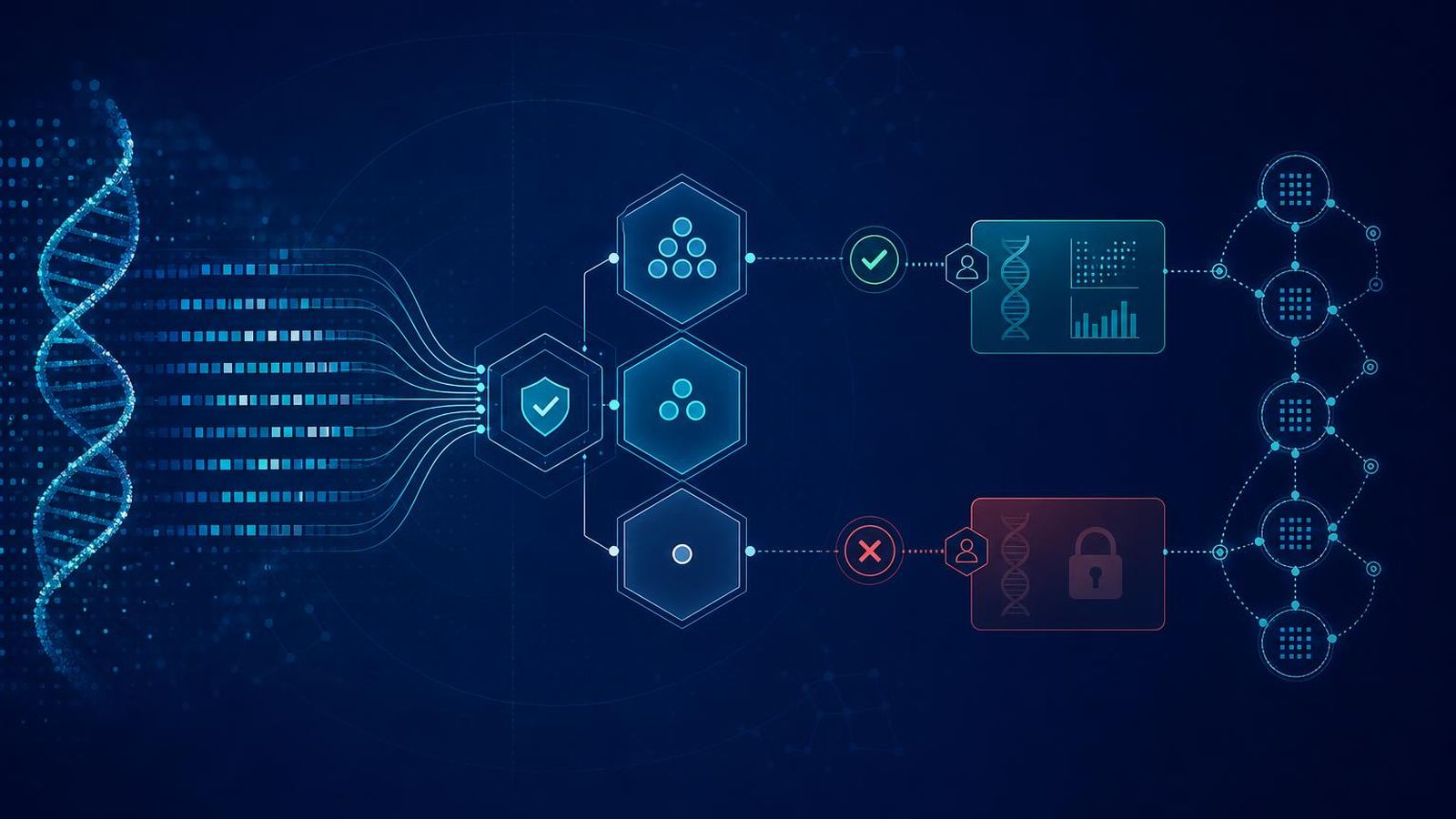
Genomics projects in the directory are those that use ledger-backed components to support the storage, consent, access control, or exchange of genomic and other high-dimensional biological data. The category includes registry designs, marketplace designs, and research data access projects.
Properties that shape the design space
Genomic data carries properties that distinguish it from ordinary clinical data. It is largely immutable for the individual. It carries information about relatives who have not consented. Re-identification risk increases as reference datasets grow. Those properties shape what a credible consent and access design looks like. Deletion is not an adequate privacy primitive for data that can persist in copies. Consent has to be scoped to what is actually revocable.
Token mechanics and their trade-offs
Several projects in this category incorporate token-based incentive mechanics. The directory does not treat token mechanics as disqualifying, but it does evaluate them separately. Projects whose token mechanics are framed primarily as wealth creation rather than utility are categorised conservatively. Projects that use tokens as a unit of access within a clearly described governance system are categorised on that basis.
Governance
Governance is a first-class concern in this category. A genomic data marketplace is a governance system. The chain records decisions. The governance apparatus has to make them. Projects that engage with governance clearly are distinguished from projects that present decentralisation as a substitute for governance.
Directory posture
The genomics category carries a conservative prior. The failure rate among ambitious projects in this space is high. Confidence labels reflect the depth of privacy engagement, the seriousness of the governance design, and the maturity of the deployment. Inclusion is not endorsement.